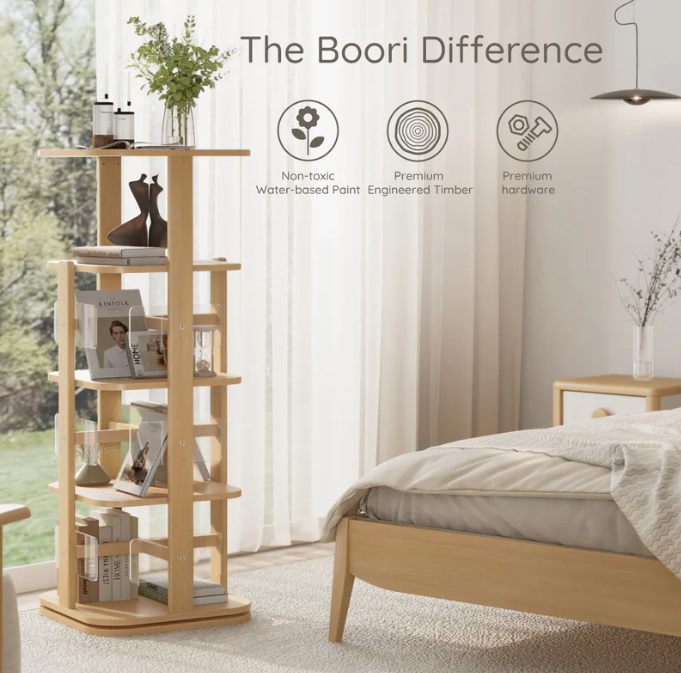
Kids bookshelves for bedrooms need to work harder than a standard shelf because the bedroom is where children read before sleep, choose books independently during quiet time, and build the daily habits that shape their relationship with reading. A bedroom bookshelf should be sized for the child, safe enough for an unsupervised room, visually calm enough to suit a sleeping space, and practical enough to stay organised day to day without adult help.
Key Takeaways
- A bedroom bookshelf needs to suit the specific dimensions of the room and the height of the child using it, not just the size of the book collection.
- Front-facing display works best for children under six because it makes book selection genuinely independent at a time when children cannot yet read spine titles.
- Wall anchoring is especially important for a bedroom bookshelf because children are in the room unsupervised, including during sleep hours.
- A calm, neutral bookshelf design integrates better with a bedroom environment than a heavily themed or brightly coloured piece.
- Placement near the bed or reading chair significantly increases how often children reach for a book independently.
Why a Bedroom Bookshelf Is Different From Any Other Shelf
A bookshelf in a living room or playroom exists in a shared space where adults are frequently present. A bedroom bookshelf lives in the child’s most personal space, the room where they sleep, rest, and spend time alone. That context changes what the shelf needs to do. It needs to be calm enough not to disrupt a sleeping environment visually. It needs to be safe enough to stand unsupervised. And it needs to be close enough to the bed that a child can reach it at any time without needing help.
The bedroom is also where the reading before sleep habit forms, which is one of the most valuable literacy habits a child can build. A bookshelf positioned near the bed makes that habit effortless. The child wakes up and books are within reach. They settle for sleep and the choice of what to read is right there. That physical proximity matters more than most parents realise in building consistent reading routines.
Choosing the Right Style for a Bedroom
| Style | Best For | Room Size | Age Range |
| Low front-facing shelf | Pre-readers and early readers | Any size | 1 to 5 years |
| Vertical bookcase | Established readers with larger collections | Medium to large | 5 years and up |
| Bookcase with storage | Rooms doubling as play spaces | Medium to large | 2 years and up |
| Wall-mounted shelf | Small rooms where floor space is limited | Small rooms | 3 years and up |
| Rotating bookshelf | Small rooms and compact reading nooks | Small rooms | 1 to 8 years |
What to Look for in Kids Bookshelves for Bedrooms
Safety in an Unsupervised Room
A bedroom bookshelf needs to meet the highest safety standard of any bookshelf in the house because children are in that room alone. Wall anchoring is non-negotiable. Anti-tip brackets should be fixed to a wall stud. Edges must be rounded on every surface the child might grab or brush against in the dark. Finishes must be non-toxic and lead-free, certified to Australian standards.
Height and Reach
The most-used shelves should sit within the child’s comfortable reach without climbing or stretching. For toddlers, this means the entire bookshelf sits at floor level. For school-age children, the main collection should sit between knee height and shoulder height. Books placed out of easy reach will not get selected at bedtime when the child is tired and does not want to make an effort.
Visual Calm
A bedroom is a sleeping space as well as a reading space. A bookshelf with very bold colours or a visually busy design works against the calm environment that supports good sleep. Neutral tones, natural timber finishes, and simple clean lines integrate with a bedroom without adding visual stimulation that competes with winding down.
Size Proportionate to the Room
A bookshelf that crowds a bedroom makes the room feel smaller and disrupts the floor space children need for play and movement. Measure the wall space available before choosing. A single low wide shelf or a compact vertical bookcase in a corner will serve most children’s bedrooms better than a large unit that dominates the room.
How to Position a Bedroom Bookshelf
- Place it within arm’s reach of the bed if possible. A bookshelf the child can reach from or right beside their bed becomes part of the bedtime routine naturally.
- Position it near a window for daytime reading. Natural light beside a bookshelf makes the reading spot genuinely pleasant to use during the day.
- Keep the floor area in front of it clear. A bookshelf crowded by other furniture is harder to access and harder to tidy.
- Add a small lamp beside it for evening reading. A reading light signals that this is a reading space and makes the shelf usable after the main lights go off.
Frequently Asked Questions
Should a kids bedroom bookshelf be anchored to the wall?
Yes, always. In a bedroom where children are unsupervised, including overnight, wall anchoring is the most important safety step. Fix the bracket to a wall stud where possible for the most reliable hold.
How many books should be on a bedroom bookshelf?
Between 10 and 20 books in active rotation is a practical range. Fewer books make the selection easier at bedtime when the child is tired. Rotate titles in from storage regularly to keep the display feeling fresh.
Is a low shelf or a tall bookcase better for a child’s bedroom?
For children under five, a low front-facing shelf is better because every book is accessible without effort. For older children, a vertical bookcase up to around 120cm works well, provided the most-used books sit on the lower shelves. In a small bedroom, a low or wall-mounted option preserves more usable floor space.
What finish is best for a bedroom bookshelf?
Neutral tones such as white, off-white, natural timber, or soft grey integrate most easily with a bedroom and remain appropriate as the child grows and the room evolves.
Final Thoughts
Kids bookshelves for bedrooms shape the reading habits children build in their most personal space. Chosen well, a bedroom bookshelf makes books effortlessly accessible at the times children are most likely to read, supports a calm sleeping environment, and stays relevant as the child grows. For Australian families looking for children’s furniture built to the quality and safety standards a bedroom requires, purpose-built kids bookshelves for bedrooms from a specialist children’s furniture brand are worth the consideration.