Introduction
A garden pond should feel calm and relaxing, yet it can quickly become a feeding spot for hungry herons. These birds are highly skilled hunters and can spot fish from surprising distances. Many UK pond owners only realise there is a problem when fish disappear, water plants are disturbed, or they notice footprints beside the pond after sunrise. Acting early is always easier than dealing with repeated visits later.
Finding the best heron deterrent for pond UK is about more than buying one random product. Every pond has different risks depending on size, shape, depth, and surrounding cover. A small patio pond may need a simple barrier, while a larger koi pond may need layered protection. The best results usually come from combining physical barriers, movement, and smart pond design that naturally reduces hunting opportunities.
Why Herons Target Garden Ponds
Herons prefer easy meals, and a garden pond can provide exactly that. Clear water, shallow edges, and visible fish create an ideal hunting ground. Unlike rivers or lakes, many home ponds are compact spaces where fish have fewer escape routes. If the pond sits in an open garden with little activity during early mornings, it becomes even more attractive.
In the UK, herons often hunt at dawn or dusk when the garden is quiet and fish are easier to approach. They are patient birds and can stand still for long periods before striking. Once they succeed in one location, they may return regularly. That is why choosing the best heron deterrent for pond UK early can prevent a short-term problem from becoming a routine visit.
Signs a Heron Is Visiting Your Pond
One of the first warning signs is missing fish, especially if healthy fish vanish without any sign of illness. Fish may also behave differently, hiding more often or staying deeper in the water. Sudden nervous movement in the pond can sometimes suggest a predator has been nearby, even if you never see the bird itself.
You should also inspect the area around the pond. Footprints in soft soil, disturbed stones, bent plants, or muddy edges can all point to a heron visit. Some owners spot the bird standing motionless in the early morning light. Recognising these clues quickly allows you to install the best heron deterrent for pond UK before further damage occurs.
Best Physical Barriers for Pond Safety
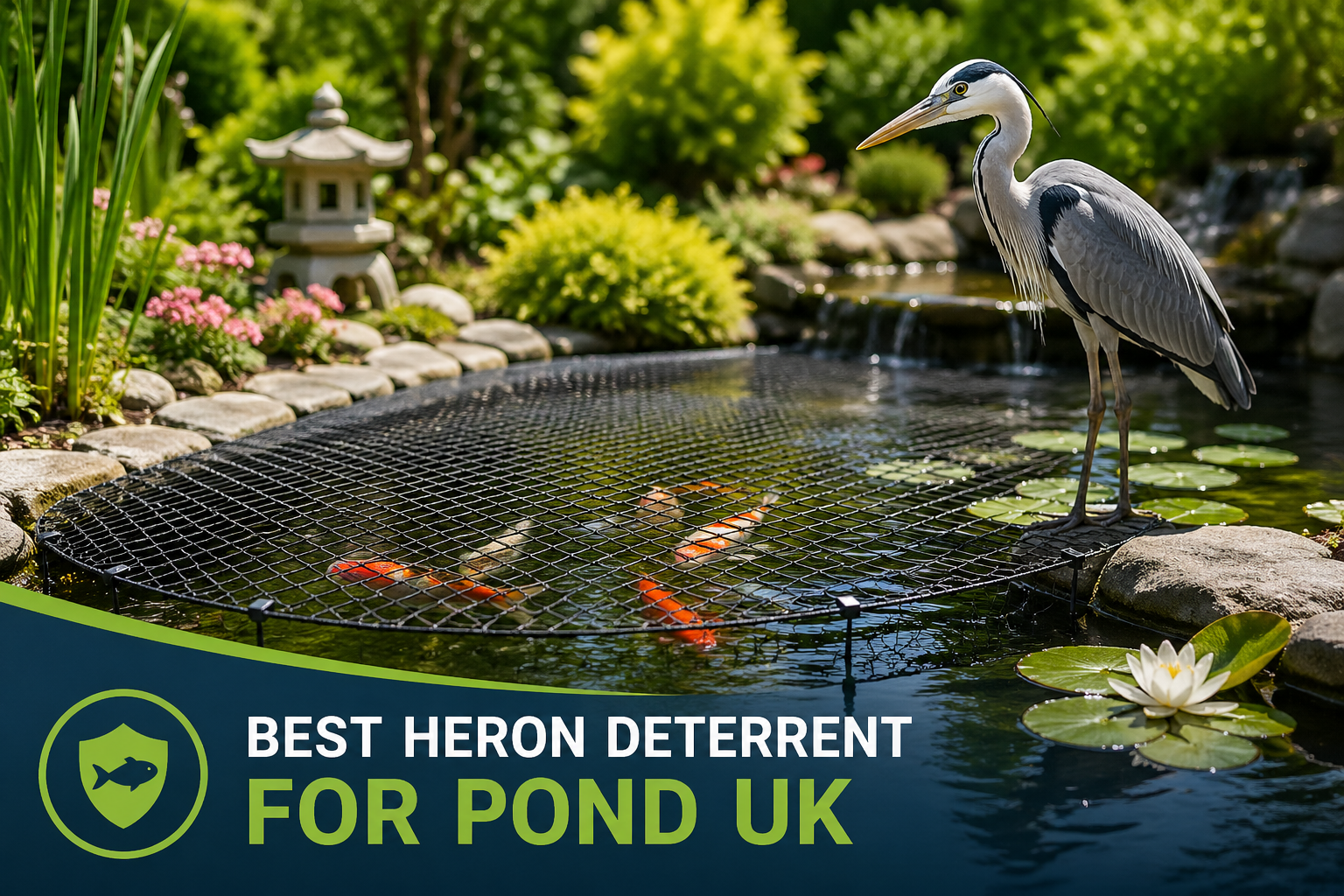
Physical barriers are often the most reliable defence because they stop access rather than trying to scare the bird away. Pond netting remains a popular choice across the UK because it is affordable and effective. A tightly secured net placed neatly above the water can protect fish while still allowing sunlight, rain, and airflow into the pond.
Other strong options include floating pond guards, perimeter wires, and raised pond edges. Floating guards create a protective surface that prevents landing space, while tripwire systems make it difficult for birds to step close enough to strike. For many households, these solutions provide the best heron deterrent for pond UK because they work continuously with minimal daily effort.
Motion and Active Deterrents
Some pond owners prefer deterrents that react when a heron enters the garden. Motion-activated sprinklers are one of the most effective examples. A sudden burst of water startles the bird, breaks its confidence, and encourages it to avoid the area. Many people like this option because it is humane and works automatically.
Reflective spinners, moving scarers, and sensor lights can also add extra protection. These tools rely on surprise, movement, and changing light patterns to make the pond feel unsafe. They are most effective when moved or adjusted regularly. Used with barriers, they can form part of the best heron deterrent for pond UK for exposed gardens where birds approach often.
Do Decoys and Fake Predators Work
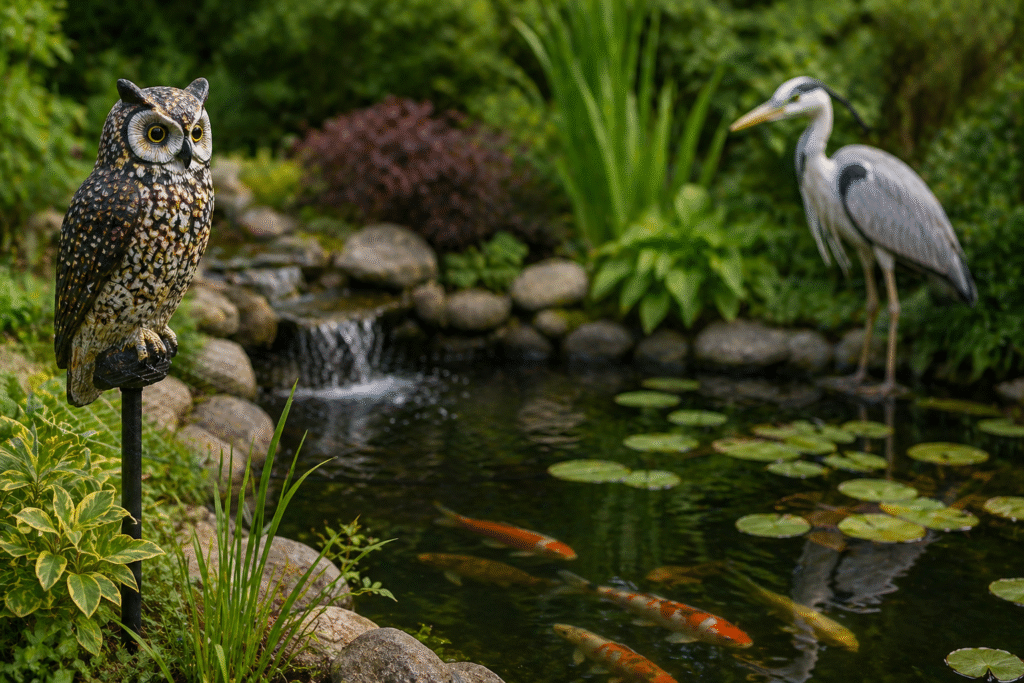
Decoys are common because they are easy to place and inexpensive compared with larger systems. Fake herons, owls, foxes, or other predator models may discourage birds at first. When placed in a new position, they can create uncertainty and make the real heron think another animal already controls that territory.
However, static decoys lose power if left untouched for too long. Herons are observant and soon realise the model never moves. The smartest approach is to change the position often and combine the decoy with another deterrent. On their own they are limited, but as part of a wider plan they can still support the best heron deterrent for pond UK.
Natural Ways to Protect Pond Fish
Good pond design can reduce risk without changing the beauty of your garden. Deeper water zones allow fish to dive away quickly, while underwater caves, pipes, or rock shelters create safe hiding places. Fish that can disappear from sight are far harder for a heron to catch, even if the bird visits regularly.
Water movement is another useful natural defence. Fountains, waterfalls, and aerators create ripples that make it harder to see fish clearly from above. Marginal plants and floating lilies also provide cover. These simple additions are often overlooked, yet they can greatly strengthen the best heron deterrent for pond UK while keeping the pond attractive and natural.
Common Mistakes That Reduce Results
A frequent mistake is relying on only one solution and expecting complete protection. A lone decoy, loose net, or occasional scare tactic may help briefly, but determined birds often adapt. Layered protection works better because if one method becomes less effective, another remains in place to defend the pond.
Another problem is poor maintenance. Nets can sag, sprinkler batteries can fail, and plants may grow in ways that create shallow ambush points. Seasonal checks are important, especially after storms or strong winds. Small adjustments throughout the year keep your setup reliable and improve long-term success without major extra cost.
How to Choose the Right Deterrent
The right option depends on your pond and priorities. Small ponds often do well with a neat net or floating ring because coverage is simple and affordable. Wildlife ponds may benefit more from natural planting and shelters, while koi ponds usually need stronger barriers due to the higher value of the fish inside.
Budget should be considered, but prevention is often cheaper than replacing prized fish. Think about how much maintenance you want and whether the pond is visible from the house. The best heron deterrent for pond UK is not always the most expensive product. It is the one that suits your layout, remains practical, and works consistently.
Conclusion
Herons are impressive birds, yet they can create costly and frustrating problems for pond owners. The most effective answer is rarely a single gadget. Instead, combining barriers, movement-based deterrents, and fish-friendly pond design gives dependable protection across the seasons and reduces the chance of repeat visits.
When selecting the best heron deterrent for pond UK, focus on what matches your pond size, fish type, and daily routine. A well-planned setup protects your pond without harming wildlife or ruining the look of your garden. With the right approach, you can enjoy clear water, healthy fish, and far greater peace of mind in 2026.
FAQs
What is the best heron deterrent for a pond in the UK?
For many ponds, the best results come from combining a physical barrier such as netting or a floating guard with a motion sprinkler. This creates both prevention and surprise, making the pond far less attractive to hunting birds.
Do fake herons really scare away real herons?
They can help for a short time, especially when moved regularly. However, most real herons eventually ignore a static decoy, so it works best alongside another protective method rather than as a standalone solution.
Is pond netting safe for wildlife?
Yes, when fitted properly and checked often. Choose strong, well-secured netting with tight edges so wildlife cannot become trapped. Quality installation is the key to keeping it safe and effective.
How deep should a pond be to protect fish?
Deeper zones give fish better escape options. Many pond keepers aim for at least 60 cm, while deeper sections can provide extra safety for koi and larger fish species.
Will herons come back after being scared away?
Yes, they may return if the pond still looks easy to hunt. Consistent deterrents and regular adjustments are important if you want long-term protection.
You may also read: Can old petrol stop a mower from starting?