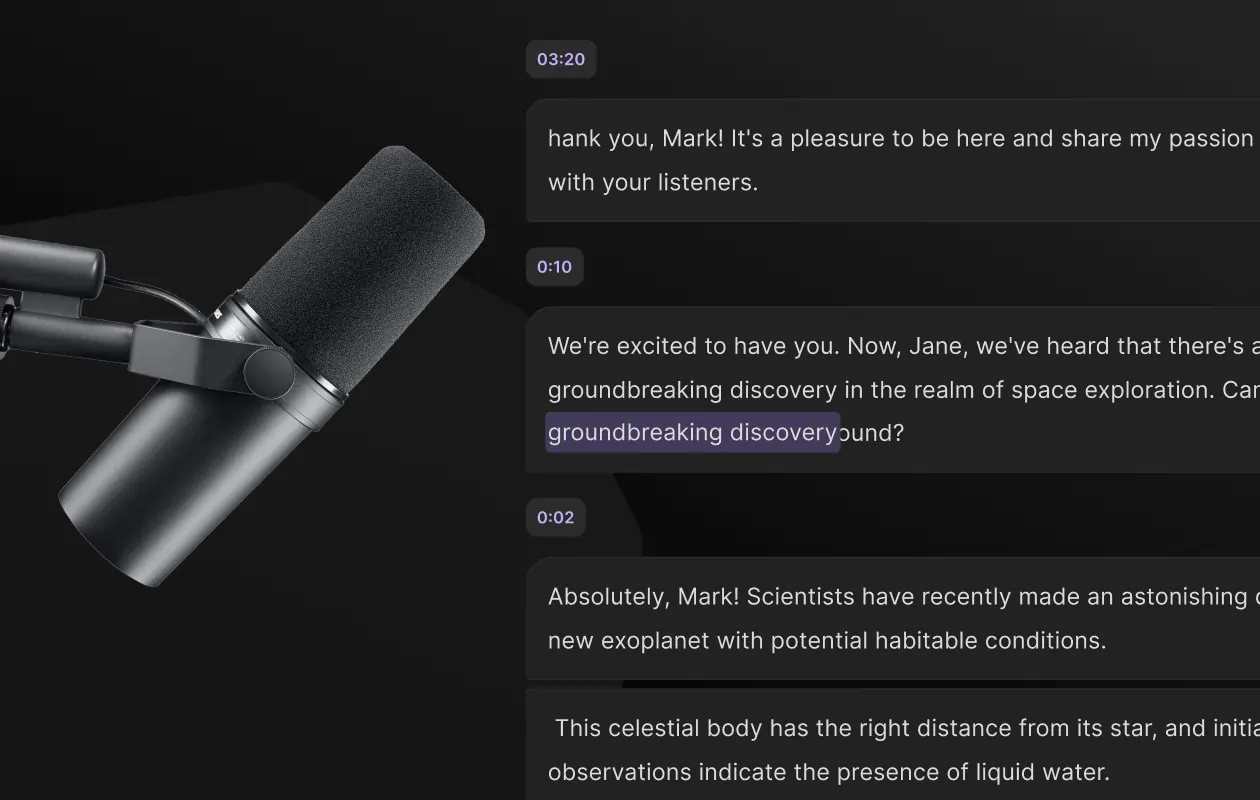
What Is Verbatim Transcription?
Verbatim transcription is the process of converting spoken audio into written text exactly as it is spoken, without removing or altering any words. This means every filler word, repetition, hesitation, stutter, and even non-verbal sounds like laughter or pauses are included in the transcript. The goal is to capture a true and unfiltered representation of speech, preserving both meaning and delivery.
This level of precision makes verbatim transcription essential in situations where accuracy matters more than readability. Unlike clean transcription, which removes unnecessary elements for clarity, verbatim transcription focuses on authenticity. It allows readers to understand not just what was said, but how it was said, providing deeper insights into tone, intent, and emotional context.
Verbatim Transcription Examples (Verbatim vs Non-Verbatim)
Understanding verbatim transcription becomes much easier when you see real examples. A verbatim transcript includes every detail of speech, even if it appears messy or repetitive. In contrast, a non-verbatim (clean) transcript removes filler words and improves readability while preserving meaning.
For example, a non-verbatim sentence might read: “I think we should go to the meeting later.” However, in verbatim transcription, the same sentence would appear as: “Um, I think, uh… we should, like, go to the meeting later.” This demonstrates how verbatim captures hesitation and natural speech patterns that are usually edited out.
Another example highlights repetition and correction. Non-verbatim: “I tried to call him yesterday, but he didn’t answer.” Verbatim: “I, I tried to call him yesterday, but, um, he didn’t—he didn’t answer.” These differences are critical in fields like legal transcription and research, where speech patterns can influence interpretation and analysis.
Types of Verbatim Transcription
There are different types of verbatim transcription, and understanding them helps you choose the right format for your needs. The two main types are full verbatim and clean verbatim, each serving different purposes depending on the level of detail required.
Full verbatim transcription includes absolutely everything spoken in the audio. This means filler words, stutters, false starts, background noises, and even incomplete sentences are recorded. It is commonly used in legal proceedings, police interviews, and academic research where every detail can impact interpretation or outcomes.
Clean verbatim transcription, on the other hand, removes unnecessary fillers such as “um” or “you know,” while keeping the original meaning intact. It improves readability while maintaining accuracy. This type is often used for business meetings, podcasts, and content creation where clarity is more important than capturing every speech imperfection.
Verbatim vs Non-Verbatim Transcription
The key difference between verbatim and non-verbatim transcription lies in the level of detail. Verbatim transcription captures everything exactly as spoken, while non-verbatim transcription focuses on readability by removing unnecessary elements such as filler words, repetitions, and minor errors.
Verbatim transcription is ideal when the way something is said is just as important as what is said. For example, hesitation in a witness statement or emotional pauses in an interview can provide valuable insights. Non-verbatim transcription, however, is better suited for general content like blog posts or business reports where clarity and flow are more important than speech accuracy.
Choosing between these two styles depends on your objective. If you need precise documentation with contextual detail, verbatim transcription is the best option. If your goal is to present clear and concise information, non-verbatim transcription offers a more polished and reader-friendly format.
Where Verbatim Transcription Is Used

Verbatim transcription is widely used across industries where accuracy and detail are critical. In the legal field, it is used for court hearings, depositions, and police interrogations. Lawyers and investigators rely on verbatim transcripts to analyze speech patterns, detect inconsistencies, and ensure that every word is documented accurately for legal purposes.
In research and academia, verbatim transcription plays a vital role in qualitative studies such as interviews and focus groups. Researchers use these transcripts to identify patterns, analyze behavior, and interpret responses without losing context. Similarly, in healthcare, verbatim transcripts of patient interactions can help maintain detailed records that support diagnosis, compliance, and legal documentation.
How to Do Verbatim Transcription (Step-by-Step)
Creating a verbatim transcript requires attention to detail and a structured approach. The first step is to listen carefully to the audio multiple times to ensure complete understanding. Using transcription software or tools can help slow down playback and improve accuracy, especially when dealing with complex or fast speech.
The next step is to write exactly what you hear, including filler words, pauses, and non-verbal sounds. It is important to avoid correcting grammar or restructuring sentences, as this would change the nature of verbatim transcription. Finally, review and proofread the transcript to ensure accuracy, consistency, and proper formatting. This process ensures a reliable and high-quality transcript.
Key Features of Verbatim Transcription
Verbatim transcription is defined by its attention to detail and commitment to accuracy. One of its main features is the inclusion of filler words such as “um,” “uh,” and “like,” which reflect natural speech patterns. It also captures repetitions, false starts, and interruptions, giving a realistic representation of how people actually speak.
Another important feature is the inclusion of non-verbal elements such as laughter, sighs, pauses, and background sounds. These elements can provide valuable context, especially in emotional or investigative situations. By preserving both verbal and non-verbal communication, verbatim transcription offers a complete and authentic record of spoken language.
Benefits of Verbatim Transcription
One of the biggest advantages of verbatim transcription is its accuracy. It ensures that nothing is lost or altered during the transcription process, making it highly reliable for legal, medical, and research purposes. This level of detail allows professionals to analyze speech patterns, emotions, and intent more effectively.
Another key benefit is transparency. Verbatim transcription provides a clear and unbiased record of communication, which is essential in situations where accountability and documentation are critical. It also helps maintain data integrity in research, ensuring that findings are based on accurate and complete information rather than edited or interpreted content.
Challenges of Verbatim Transcription
Despite its advantages, verbatim transcription can be time-consuming and complex. Transcribing every word, including repetitions and non-verbal sounds, requires significant effort and concentration. This makes the process slower compared to clean transcription, especially for long or complicated recordings.
Another challenge is readability. Verbatim transcripts can appear cluttered and difficult to read due to the inclusion of filler words and interruptions. This is why it is important to choose the right transcription style based on your needs. While verbatim is ideal for accuracy, it may not always be suitable for general reading or publishing purposes.
Verbatim Transcription in the Digital Age
With advancements in technology, transcription has become more accessible through AI-powered tools and speech recognition software. These tools can generate transcripts quickly and efficiently, making them useful for initial drafts. However, they are not always accurate, especially when dealing with accents, overlapping speech, or technical terminology.
Human transcriptionists remain essential for ensuring quality and precision. They can understand context, identify speakers, and accurately capture nuances that machines often miss. In high-stakes environments such as legal or medical settings, human expertise is crucial to producing reliable and accurate verbatim transcripts.
FAQs About Verbatim Transcription
What is verbatim transcription in simple terms?
Verbatim transcription means writing down every word exactly as it is spoken, including filler words, pauses, and repetitions. It provides a complete and accurate record of speech without editing or summarizing the content.
What is an example of verbatim transcription?
An example of verbatim transcription is: “Um, I, I think we should, like, go now.” This includes hesitation, repetition, and filler words that would normally be removed in clean transcription.
When should you use verbatim transcription?
Verbatim transcription should be used in legal proceedings, research interviews, and situations where speech patterns and exact wording are important. It helps preserve context and ensures accurate documentation.
What is the difference between verbatim and clean transcription?
Verbatim transcription includes everything spoken, while clean transcription removes filler words and improves readability. The choice depends on whether accuracy or clarity is more important for your purpose.
Is verbatim transcription better than non-verbatim?
Verbatim transcription is better for accuracy and detailed analysis, but non-verbatim is better for readability and general use. Each has its own advantages depending on the context and objective.
Conclusion
Verbatim transcription is a powerful method for capturing spoken language with complete accuracy and authenticity. By preserving every word, pause, and nuance, it provides a deeper understanding of communication that goes beyond simple text. This makes it an essential tool in fields where precision and context are critical.
As the demand for accurate documentation continues to grow, verbatim transcription remains highly relevant despite advances in technology. Whether used in legal cases, research studies, or professional settings, it ensures that every detail is preserved and understood. Choosing the right transcription style ultimately depends on your needs, but when accuracy matters most, verbatim transcription stands as the gold standard.
You may also read: F1 News: Christian Horner Sacked by Red Bull After 20 Years – A Shocking Shift in Formula 1