Introduction
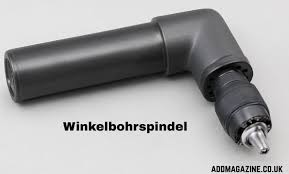
A Winkelbohrspindel is an advanced mechanical drilling component designed to transmit rotational force at an angle, typically 90 degrees, enabling machining operations in confined or geometrically complex areas. Unlike standard drilling systems that require direct axial access, this tool allows operators to work efficiently around obstacles, internal machine structures, or tight assembly environments. It is widely used in industrial production, CNC machining, metal fabrication, and precision woodworking where accuracy and accessibility are critical performance factors.
In modern manufacturing environments, demand for higher precision and reduced setup time has made angled spindle systems increasingly important. The Winkelbohrspindel improves workflow efficiency by reducing the need to reposition workpieces, thereby minimizing alignment errors. Its use supports consistent machining quality while maintaining productivity in complex production systems. This makes it a key component in both automated production lines and manual machining operations where spatial limitations exist.
What is a Winkelbohrspindel
A Winkelbohrspindel, also known as an angle drilling spindle or right-angle spindle head, is a mechanical device that redirects rotational motion from a primary drive into an angled output shaft. This is achieved through a system of precision-engineered bevel or hypoid gears housed within a rigid casing. The output is most commonly set at 90 degrees, although adjustable variants exist for specialized machining applications requiring variable angular positioning.
These spindles are engineered for industrial-grade performance, meaning they are capable of handling continuous loads while maintaining high positional accuracy. They are commonly integrated into CNC machines, robotic systems, and specialized drilling rigs. Depending on design, they can support different tool interfaces such as ER collets or industrial tapers, ensuring compatibility with a wide range of cutting tools and machining environments.
A key distinction of the Winkelbohrspindel is its ability to maintain torque efficiency while redirecting motion. This makes it suitable for both light precision work and heavy-duty machining tasks where direct access is not possible. It is widely used in industries where space constraints and machining precision must be balanced effectively.
How a Winkelbohrspindel Works
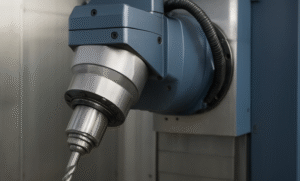
The working principle of a Winkelbohrspindel is based on mechanical power transmission through angled gear systems. Inside the housing, bevel or hypoid gears transfer rotational energy from the input shaft to the output shaft at a fixed or adjustable angle. This system ensures that torque is preserved as efficiently as possible while changing the direction of force application. The precision of these gears is critical to maintaining smooth operation and minimizing vibration during high-speed machining.
Bearings play a major role in ensuring stability and accuracy. High-quality angular contact or tapered roller bearings are commonly used to support radial and axial loads generated during drilling. These components help maintain low runout values, which is essential for achieving precision holes and consistent machining results. The rigidity of the housing further enhances stability by reducing deflection under load.
Lubrication and cooling systems are also integrated into many advanced models. Depending on design, the spindle may use grease lubrication, oil bath systems, or even internal coolant channels. These features help reduce friction, manage heat buildup, and extend the operational lifespan of internal components. In industrial environments, this ensures continuous operation with minimal performance degradation.
Key Technical Features and Specifications
Modern Winkelbohrspindeln are defined by a wide range of technical specifications that determine their performance in industrial applications. These include torque capacity, spindle speed, gear ratio, and tool interface compatibility. Depending on the model, torque values can range from low-power precision units to high-torque systems capable of heavy material removal. Similarly, spindle speeds can vary from a few hundred RPM to extremely high-speed configurations exceeding tens of thousands of RPM.
Another important specification is runout accuracy, which measures the deviation of the rotating tool from its true axis. High-quality systems maintain extremely low runout values to ensure precision drilling and improved surface finish. Additionally, tool interface systems such as ER collets, HSK, BT, or Weldon shanks determine compatibility with different machining setups. These interfaces ensure secure tool holding under varying operational loads.
Advanced models may also include features such as through-spindle coolant delivery, air purge systems, and modular mounting options. These enhancements improve chip evacuation, thermal control, and integration flexibility within CNC systems. The combination of these technical features makes the Winkelbohrspindel suitable for both automated production environments and specialized machining tasks.
Applications of Winkelbohrspindel
Winkelbohrspindeln are widely used in industries that require precision machining in restricted or complex geometries. In automotive and aerospace manufacturing, they are essential for drilling and milling in engine components, structural assemblies, and tight internal frameworks. Their ability to access difficult angles without repositioning the workpiece significantly improves production efficiency and reduces assembly time.
In CNC machining and industrial automation, these spindles are often integrated into robotic arms and multi-axis machining centers. This allows manufacturers to perform multi-directional drilling operations within a single setup. It reduces machine downtime and improves production consistency. Additionally, they are frequently used in tooling and fixture construction where precision alignment is critical.
Woodworking and metal fabrication industries also benefit from their versatility. In cabinetry, furniture production, and custom metalwork, Winkelbohrspindeln enable angled drilling operations that would otherwise require complex jigs or multiple setups. This makes them valuable not only in large-scale manufacturing but also in small workshops and prototyping environments.
How to Choose the Right Winkelbohrspindel
Selecting the right Winkelbohrspindel requires careful evaluation of technical and operational requirements. One of the most important factors is torque capacity, which must match the material and machining process. High-density materials such as steel require stronger torque systems, while lighter materials like wood or plastic may require less power but higher speed capabilities. Understanding workload requirements is essential for optimal selection.
Compatibility with existing machinery is another critical consideration. The spindle must match the machine’s interface system, whether it is CNC-based or manually operated. Factors such as mounting style, tool holder compatibility, and feed system integration must be evaluated to ensure seamless operation. Additionally, spatial constraints should be analyzed using CAD models to avoid collision issues during operation.
Other important selection criteria include cooling requirements, gear ratio, and precision tolerance levels. Industrial users should also consider long-term operational costs, including maintenance frequency and component durability. Choosing a well-balanced system ensures higher productivity, reduced downtime, and improved machining accuracy over time.
Maintenance and Best Practices
Proper maintenance is essential to ensure the long-term performance and reliability of a Winkelbohrspindel. Regular inspection of gears, bearings, and seals helps prevent premature wear and mechanical failure. Lubrication must be performed according to manufacturer specifications to reduce friction and maintain smooth gear operation. In industrial environments, scheduled maintenance intervals are critical for sustained performance.
Safe operation practices also play a key role in extending tool life. Operators should avoid overloading the spindle beyond its rated torque capacity, as this can lead to overheating and mechanical stress. Proper handling during installation and removal is equally important to prevent misalignment or damage to precision components. Storage in a clean, dry environment further protects the spindle from contamination.
Monitoring performance indicators such as vibration, noise levels, and temperature can help identify early signs of wear. Addressing these issues promptly reduces downtime and prevents costly repairs. By following structured maintenance procedures, users can significantly extend the operational lifespan of the Winkelbohrspindel while maintaining consistent machining accuracy.
FAQ – Winkelbohrspindel
A common question is how a Winkelbohrspindel differs from a standard angle drill attachment. The main difference lies in precision, durability, and industrial design standards. While simple attachments are suitable for light-duty tasks, Winkelbohrspindeln are engineered for continuous industrial use with tight tolerances, high rigidity, and low runout performance. This makes them suitable for professional manufacturing environments where accuracy is critical.
Another frequently asked question is whether Winkelbohrspindeln can be used in CNC machines. The answer is yes, many modern models are specifically designed for CNC integration. They support tool offset programming, CAD-based collision simulation, and automated tool path optimization. This allows them to function efficiently in multi-axis machining systems, improving production flexibility and reducing manual intervention.
Users also often ask about maintenance frequency and operational lifespan. With proper lubrication, controlled usage, and regular inspection, a high-quality Winkelbohrspindel can operate reliably for many years. Lifespan depends heavily on workload intensity and maintenance discipline, but industrial-grade models are designed for long-term durability even in continuous production environments.
You may also read: UK Property Tax Guide on Rental Income